Looking to fit a green roof to your North London property? Plantsman specialises in local, standards-led green roofs and can guide you through suitable types, planning considerations and long-term maintenance so your roof performs for years. You’ll get a tailored solution from survey and design through to installation that balances biodiversity, drainage and structural limits specific to North London homes.
This article explains why Plantsman’s installers matter, what green roof systems they offer, how the project runs from survey to handover, and the practical benefits you can expect for your roof, energy bills and neighbourhood. You’ll find clear, practical information to help you decide whether a green roof is the right investment for your property.
You will find practical services, verified credentials, and a locally based installation team focused on performance, biodiversity and compliance. Expect clear deliverables, predictable timings, and maintenance options tailored to your roof type and use.
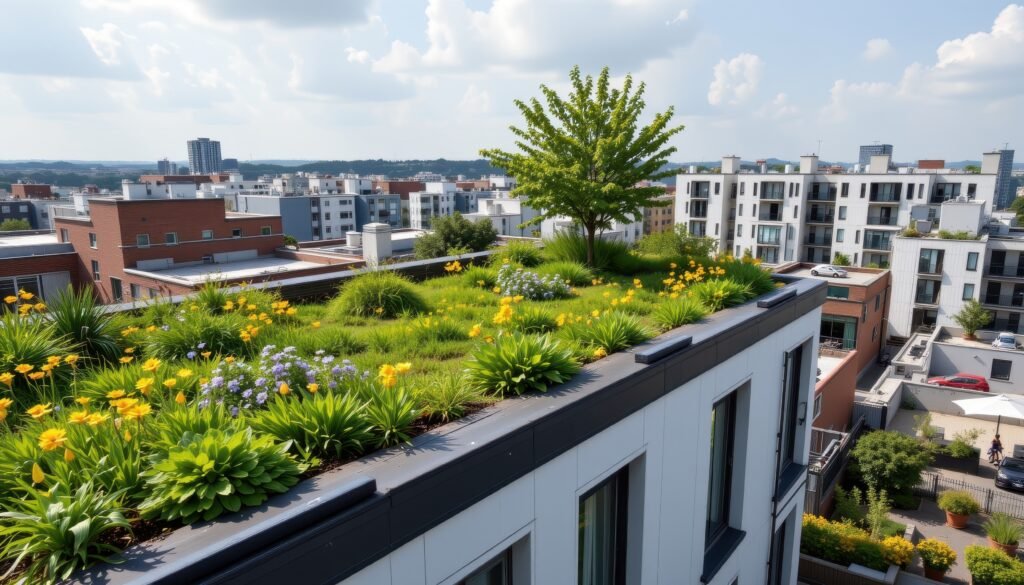
The Plantsman designs and installs both extensive and intensive green roofs for terraced houses, apartment blocks and light-commercial buildings across North London. You can choose sedum mats for low-maintenance coverage, wildflower mixes to boost pollinators, or bespoke intensive systems with deeper substrates for rooftop gardens and planters.
Work begins with a measured survey and drainage assessment, followed by a written specification that lists membrane type, root barrier, drainage layer, substrate depth and planting palette. You receive a fixed-price quote, a programme showing start and completion dates, and a handover pack with warranty documents and maintenance guidance.
Optional extras include a timber access deck, integrated irrigation, and periodic biodiversity audits to track plant establishment and invertebrate presence.
The company has completed projects across boroughs including Camden, Islington and Enfield, with case studies that show substrate depths, load calculations and stormwater attenuation figures for each job. Those case studies help you verify suitability for your building and confirm expected performance, such as improved insulation values and reduced surface runoff.
Your project will be managed by a single point of contact based in North London who coordinates site surveys, scaffold access and Health & Safety documentation. Install teams use electric tools where possible, work to specified lifting plans for modular trays and comply with working-at-height regulations.
Teams include a planting specialist who sources native plugs and establishes planting schedules timed for London’s growing season. After installation, a local maintenance operative can perform annual checks, weed control and substrate depth inspections under a signed maintenance agreement.
You will find lightweight, low‑maintenance systems for limited access roofs, robust planted terraces that support deep soils and trees, and designs prioritising native species and biodiversity for wildlife value.
Extensive systems suit flat or shallow‑pitched roofs where weight and maintenance access are limited. Typically you get 50–150 mm of substrate, a waterproof membrane, root barrier, drainage layer and a sedum or drought‑tolerant plant mix that needs only annual checks and seasonal weed control.
These roofs add insulation and manage rainwater runoff without major structural reinforcement, so they work well on older terraced houses and lightweight extensions.
Installation is fast with modular trays or loose‑laid layers, reducing disruption to your building. Costs are lower than deeper systems and lifecycle maintenance is minimal, though you should budget for inspections after storms and occasional replanting where patches fail.
Intensive roofs behave like ground‑level gardens and require structural capacity for greater loads. Expect 200 mm to 1,000+ mm of substrate, irrigation, tree pits, and paved access. You can plant shrubs, perennials and small trees, and create usable roof terraces for seating or allotment beds.
You must assess load‑bearing capacity and drainage design before installation; many London buildings need reinforcement or bespoke lightweight soil mixes.
Maintenance mirrors a conventional garden: regular watering, pruning, soil management and safe access for gardeners. These systems deliver high amenity value and can significantly increase usable outdoor space and property value when designed and maintained correctly.
Biodiverse roofs focus on native wildflowers, grasses and microhabitats to support pollinators, birds and invertebrates. Substrate depths vary from extensive to shallow‑intensive depending on target species, and you often include habitat features such as log piles, shallow scrapes for amphibians and varied substrate patches.
Design uses locally appropriate seed mixes and phased planting to establish long‑term ecological value rather than short‑term aesthetics.
Maintenance prioritises ecological outcomes: seasonal monitoring, targeted invasive species control and removal of cuttings only where appropriate to preserve seed banks. These roofs can contribute to biodiversity net gain targets and enhance ecological connectivity across North London neighbourhoods.
This section explains how you move from site assessment to a living roof that meets performance and biodiversity goals, and how ongoing care preserves those benefits. It highlights design decisions, install steps, and maintenance tasks that affect insulation, drainage, and habitat value.
You start with a measured site survey and structural assessment to confirm load-bearing capacity and roof waterproofing condition. Expect on-site checks of falls, parapet detail, drainage outlets and existing membrane, plus roof access and health-and-safety constraints.
Design meetings set the planting palette, substrate depth and roof type (extensive sedum, biodiverse or intensive). The design will list exact substrate depths, irrigation needs, and species mixes tailored to north London microclimates and sun exposure. You receive a schematic showing build-up layers: waterproofing, root barrier, drainage layer, filter fleece, substrate and planting zones.
You also get a specification for biodiversity features you request – insect hotels, nesting boxes, shallow gravel refuges – and performance targets for stormwater attenuation, U‑value improvement and maintenance frequency. The final design includes a method statement, planned access points and a quoted timetable.
You are given a detailed programme before work starts, including scaffold or MEWP requirements and a delivery schedule for materials to avoid on-roof storage. Install teams protect the existing membrane, repair or replace it if needed, then fit a tested root barrier and protection board.
Next they install the drainage layer and filter fleece, followed by the engineered substrate delivered in bulk or modular trays depending on access. Planting occurs in phases: larger planting pockets or plug planting for biodiverse roofs, and mat/blanket installation for sedum systems. Contractors compact only where required to avoid substrate settlement issues.
Quality checks include water-tightness testing, drainage flow tests and photographic handover. You receive as-built drawings, product data for each layer, and certificates for waterproofing and warranties that typically cover workmanship and materials.
Your maintenance plan should specify inspection intervals (commonly twice yearly) and tasks tied to seasonality. Routine visits check drainage outlets, remove debris, top up substrate in settled areas and control invasive weeds like Cotoneaster or bramble.
Seasonal tasks include inspecting irrigation lines in summer and clearing moss in shaded areas during autumn. For biodiverse roofs, management focuses on rotational mowing or brush-cutting and targeted sowing to maintain plant diversity and prevent scrub encroachment.
Maintenance contracts can include emergency call-outs for leaks, scheduled biodiversity surveys, and annual condition reports with photos and recommendations. Make sure the contract lists response times, scope of works, and any consumables or plant replacement allowances.
You get measurable improvements in stormwater management, thermal comfort and street-level appearance. These benefits matter for terrace houses, new builds and retrofits across North London boroughs.
A green roof reduces roof runoff by retaining rainfall in its substrate and plants, which helps lower pressure on London’s combined sewer system during heavy storms. Typical extensive sedum systems retain 30–60% of annual rainfall on-site; deeper planted systems retain more.
Green roofs also capture airborne particulates and provide pollen and nectar resources for bees, hoverflies and solitary wasps that are common in North London gardens. Choosing native wildflower mixes increases local biodiversity more than monocultural sedum mats.
When you install a green roof, you add habitat stepping-stones across densely built streets. Even small terraces and flat-roofed extensions can support pollinators and invertebrates if you select suitable substrate depth and plant species.
A planted roof provides additional thermal mass and insulation, lowering heat loss in winter and reducing peak overheating in summer. Tests on urban dwellings show internal temperature swings become smaller when a green roof is correctly specified with insulation and vapour control.
You can expect reduced heating demand in cold months and lower reliance on mechanical cooling in heatwaves, which matters in North London where housing stock often has limited roof insulation. Savings vary by building type, but homeowners commonly report noticeable differences in upstairs comfort and fuel bills.
Proper installation – membrane, root barrier, insulation and drainage – ensures the system performs reliably over time. Combine the green roof with attic insulation upgrades to maximise year-round energy benefits.
A living roof transforms underused horizontal surfaces into visible green space from neighbouring flats and upper floors. That makes a positive difference on tight streets in areas like Highgate, Crouch End and Tottenham where private gardens are small.
You can tailor appearance to your taste: low-maintenance sedum for a tidy look, mixed wildflowers for seasonal colour, or small shrubs on deeper substrates for a roof terrace. Plant choice and patterning influence curb appeal and can increase perceived property value to potential buyers.
Maintenance is generally low for extensive systems, but a simple annual inspection and selective weeding keep the roof looking its best and protect its performance over decades.